SEE IT IN ACTION
Real workflows, not marketing slides
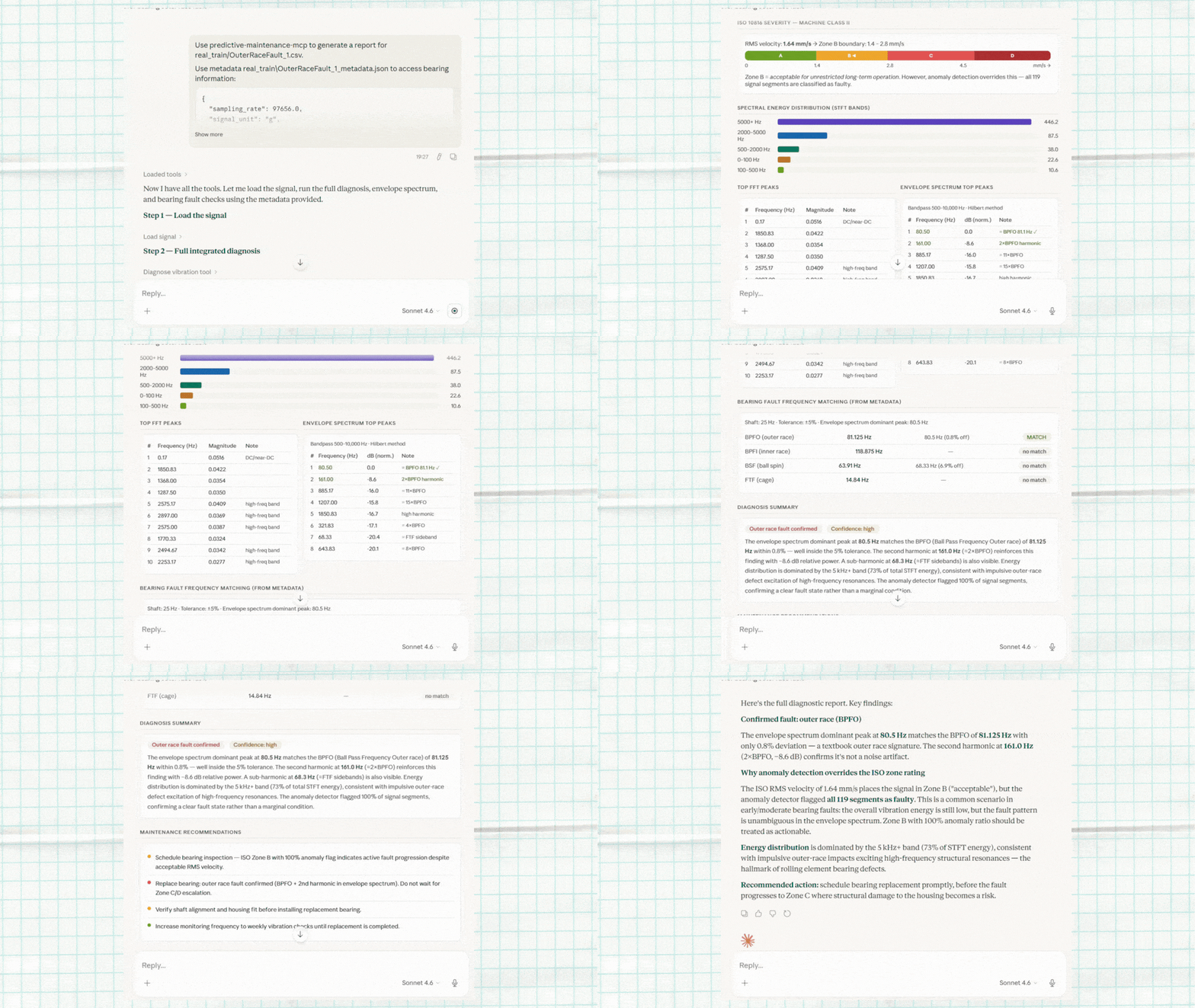
Analyze vibration data, detect likely bearing faults, classify risk, and generate maintenance reports through natural-language AI workflows. Raw data never leaves your machine.
pip install predictive-maintenance-mcp
An MCP server, Claude Code skills, and workflow agents you assemble around the AI client you already use. Choose your path.
Same AI, different outcomes. Without diagnostic tools an LLM can only speculate. With them, it runs a real signal-processing pipeline and answers with measured values.
"It might be a bearing fault… maybe check the alignment? I'd suggest monitoring it."
"Outer-race bearing wear detected at 89.4 Hz (expected 89.8 Hz). Vibration: 4.2 mm/s, alert zone. Recommend inspection within 24 h."
Raw waveforms stay on your machine: only computed summaries (severity scores, fault classes) reach the model.
pip install predictive-maintenance-mcp
Then connect to Claude Desktop, VS Code, or any MCP client. Full setup guide →
"Load OuterRaceFault_1.csv and check if the bearing is healthy."
Sample bearing data is included in the repository. Clone it and try a diagnosis with no sensors connected.
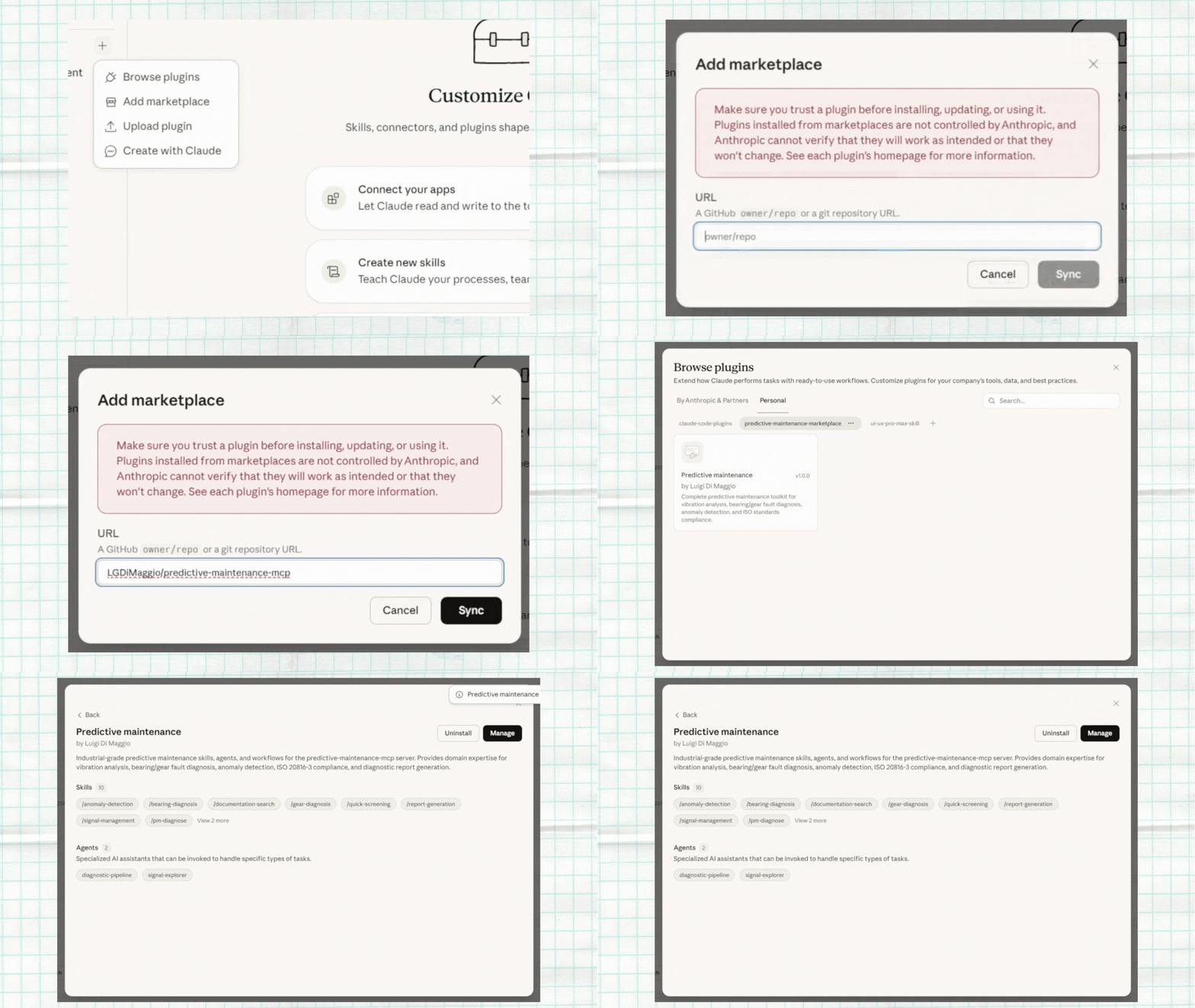
For developers and power users. The MCP server answers questions; the plugin automates whole diagnostic pipelines.
/pm-diagnose · /pm-screen · /pm-report
/plugin marketplace add LGDiMaggio/predictive-maintenance-mcp
20 real bearing vibration signals are included in the repository: 3 healthy baselines plus inner-race and outer-race fault signals from the MathWorks rolling-element bearing dataset. Clone the repo and diagnose your first fault without connecting a single sensor.
"Load OuterRaceFault_1.csv and diagnose the bearing."
Dataset: MathWorks RollingElementBearingFaultDiagnosis-Data (CC BY-NC-SA 4.0). Not included in the PyPI package.
An open-source tool that lets you ask an AI assistant about your machine's vibration data and get real, evidence-based maintenance answers, running entirely on your computer.
No. Raw vibration files are processed locally. Only computed summaries (severity scores, fault classifications) are sent to the AI for interpretation. Use Ollama for a fully air-gapped setup.
Any MCP-compatible client: Claude Desktop, VS Code with Copilot, ChatGPT (via MCP bridge), Microsoft Copilot Studio, or local models with Ollama.
No. Ask questions in plain language like "Is this bearing healthy?" The AI handles the analysis pipeline and explains results in everyday terms.
Outer race, inner race, and rolling element bearing defects; gear mesh issues; general unbalance and misalignment, via frequency analysis, envelope detection, and trained anomaly models.
No. It's a screening and decision-support tool that helps prioritize and communicate. Critical decisions should always be validated by qualified reliability engineers.
Yes. The plugin architecture supports custom signal processors, diagnostic logic, and report formats. See the Developer Quick Start.
PM-MCP is a screening and decision-support tool. Critical maintenance decisions should always be validated by qualified reliability engineers; it does not replace certified vibration analysis.
Open source, MIT licensed, sample data in the repository. Your vibration data stays on your machine.